Thursday, February 8, 2024

Week 6 and 7 New Zealand

    Since we had so many sea days and then seven days in New Zealand I decided to wait and do all of New Zealand as one blog.

I am so impressed with New Zealand and it's culture. It is a fairly new country as it was discovered by Polynesians in the late 13th century and by Europeans in 1642. The English began to explore the area in the 1700s under James Cook and by 1840 they signed the Treaty  of Waitangi with the Māori tribes making New Zealand a colony within the British Empire. They suffered for many years with conflicts between the British and the Māori. In 1947, New Zealand became an independent nation. What most impressed me was how much of modern day culture reflects the Māori culture. Starting in the 1970s, the Māori began to claim their rights and respect of the European descendants. There was an addition to the Treaty of Waitangi that made Māori a national language and supported legislation to incorporate it in everyday living. So towns, signage, classrooms, etc. find the Māori words/language in use. Students learn both English and Māori. We found that all the English people are very supportive of this and we saw how all citizens were looking forward to Waitangi Day celebrations like we do the Fourth of July.

We visited The Bay of Islands (Waitangi), Auckland (3 days), Bay of Plenty, Napier, and Wellington.

I have a wide variety of photos in this blog showing how much we, and our friends, all enjoyed visiting here. We found out that immigration here is very restrictive.

Waitangi:

Veritable Oyster Catchers

Old Stone Building Waitangi Treaty

Wake Māori Boat

Rainbow Falls in Kerikeri

Rainbow Falls


                                                        Hundertwasser toilets in Kawakawa

Hundertwasser design in Kawakawa

Auckland and Devonport—
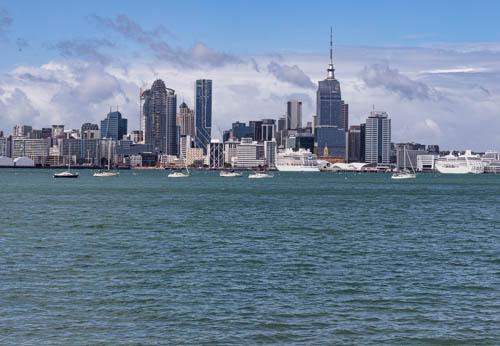
We spent 3 days in this city docked at the foot of Queen Street. The city has some older buildings from the late 1800s but most of the buildings are quite modern. This is the only place where we saw homeless people. We went to Victoria Hill and the war memorial/museum. From there we had beautiful views of the city. The museum was very well designed with the upper level housing information on WW I, WW II, Vietnam, and other times where their men and women served. Very important to them is how the women served in this events. The lower level had a special exhibit of Māori culture as we were there for the anniversary of the Waitangi Treaty. Excellent information. The next day we toured the Auckland and then the city of Devonport. Devonport was a quaint small town. Beautiful Victorian homes sometimes referred to as Queenlanders were in abundance. We went to the military lookout from WW II where there were canons mounted to protect the city. We spent the rest of the afternoon in Devonport having “smash burgers” at a small walk-in eatery. They were wonderful and the fries were plentiful. They even had a gluten-free bun that was tasty! To have a real hamburger was fantastic. Bought chocolate at their chocolate shop (Berry Callebaut chocolate, visited their wonderful new library with their welcoming cat (see below), and then took the ferry back to Auckland. The next day we just walked around seeing all the art works in town. Several pictures did not turn out but have included a drinking fountain.

Auckland

Naval base


Gun turret from WW II

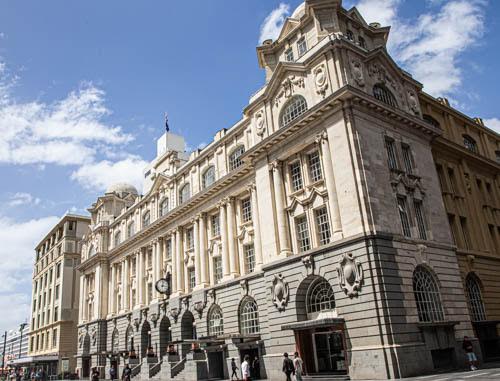
The old railroad Station

The old Ferry Terminal

Auckland from Devonport

WW II plane

Ceiling in museum

Māori display

Library Cat

Bay of Plenty—
We took a trip to view the kiwi production of the region. New Zealand is the third largest exporter of kiwi in the world. There are three types of kiwi- traditional green, sun yellow, and a new variety not yet exported the red kiwi. The yellow type starts off with being tented and then eventually moved down to regular vine structures and the green are only on the basic structures. They are similar to grapevine structures. We tasted only the green and the yellow (sweet), heard about how the process works, and all about the nutritional values of eating kiwi. We will now look for kiwis at home. We also saw a dance/music performance by native Māori. Very interesting/

Tented sun yellow kiwi vines

Green kiwis

Whakaari or White Island Volcano puffing smoke

Napier—-
I would move here in a heart beat. Such a wonderful small city. The coastline is beautiful, the Art Deco buildings are protected by law, the people are so friendly, and the weather is perfect all year. The city was heavily damaged by an earthquake in 1931. New Zealand averages over 200 earthquakes a year. The 1931 earthquake took out most of the buildings and added whole acreage to the city. At the shoreline there were lagoons and boggy areas. After the earthquake the land was pushed up and these lagoon areas were now land. The city burned due to the waterlines being broken and fire trucks were unable to get pressure for their hoses to work. Luckily, the NZ navy had a ship, the Veronica, off shore and were able to wire Auckland about the event. By 8 am the next morning emergency ships were there supplying much needed food and shelter. 


Napier shoreline park

Napier Main Street

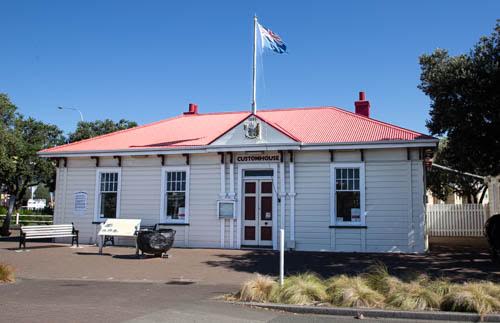
Old Custom House that survived the earthquake

The “train” used to take visitors on a tour of the city.
The driver, along with his father and wife, built it from scratch using a farm tractor as the engine.
Fun to ride in and the driver, Will, was wonderful.


Will, the driver and builder of the “train”

Bell from the HMS Veronica

One excursion was a tour of the city in these old cars and the drivers were all dressed in period clothing.
They stayed on the pier for us to take their pictures and answer questions


Art everywhere, here is a boy climbing a pole

And his mother motioning him to get down.

Wellington—
This is the capital of New Zealand. It is the most southern capital in the world. It too was clean, beautiful, and friendly. We learned more about the social changes passed by their Parliament. New Zealand granted women the right to vote on September 19, 1893. The First Nation to do so. We also went to their famous gardens and rode the trolley to the top of this city’s overlook.

Parliament building

Called the “beehive” this is offices and chambers for Parliament but all voting occurs in the main building


Statue to Gandhi who visited the city 


Loved this. It is a human sundial. You stand on that day’s date on the Azimuth projection scale, hold your hands together over your head, and the shadow tells the time. It works !!

The gardens mainly consist of a large rose garden and a greenhouse. The roses were at the end of the season but the greenhouse was awesome. 

Rose garden 


Hibiscus
 
Red hot cat’s tail (chenille plant)

Spiral Ginger

Black Prince Water Lily


Black Bat Flower

Fountain

Outside garden Phlox and Saxifrage

All over New Zealand you see timber at the docks. They are a leading nation of lumber exportation. 


Sunday, January 28, 2024

Week 5 French Polynesia and Sea Days

 After 5 days at sea following our visit to Hawaii we landed in the beautiful island nation of French Polynesia.  Our first stop was on the island of Bora Bora. The island is lush with palm trees, flowers, grasses and other vegetation. French Polynesia is a society of islands forming an archipelago with many of the islands being atolls. An atoll is a volcanic island surrounded by coral reefs. 

Bora Bora island is a smaller island with a population just over 10,000. Tourism is its main economic source. The people we met were welcoming and very proud of their island. Due to the coral reefs, the Neptune had to anchor outside of the reef and we tendered to the island. We selected the Bora Bora Cruise as our extension but switched to the Le Truck tour due to ease of getting on and off the boat. The tour was bumpy as the roads are partially unpaved. We saw numerous thatched bungalows on piers in the water, visited an outdoor workshop that dies fabric for sarongs, and Marlon Brando’s bungalow used in the movie Mutiny on the Bounty. After the movie, Brando used it for himself. We also stopped at the famed Bloody Mary bar and restaurant. This place has been closed since Covid and has just recently been reopened. Jeff bought a t-shirt. 


Musicians greeting us on Bora Bora

Tie-dying sarongs 

Bloody Mary’s Bar

One small section of the famous people who have been to Bloody Mary’s

Church on island

Marlon Brando’s bungalow

Tiki along a private driveway

                                                               One of many hotel bungalows

                                                                    Beach on Bora Bora

The next day we visited Moorea. Again, a very lush island with high volcanic mountains and coral reefs. We choose a panoramic tour and later in the day a Scenic lagoon boat tour. Moorea has a population of approximately 18,000 people. As with Bora Bora, they are highly tied to the tourism trade. The people are very friendly and many speak three languages: Tahitian, French, and English. Both islands only have K-8 schools and their children take a 5:30 am boat to Tahiti for high school returning home around 5 pm. 

We visited a mock-up of a traditional Tahitian village and this one had several reproductions of Paul Gaugain’s works

Photo op in the village


Traditional style house

Viking Neptune anchored off Moorea

Mountain with 3 meter hole in the top on Moorea

Breadfruit tree- still a staple in Polynesia 


Our lagoon tour boat

Carved into the mountain is a topographic map of Moorea along with a yellow gecko 
Moorea translates into yellow gecko

Hen trying to avoid the drenching rain at Belvedere Cove Overlook
Yes, I was crazy enough to go take a picture!

Tahitian snorkeling guide with native tattoos
No, I did not go snorkeling as I stroll the picture from a friend who was on this man’s boat.

                                                                Scenic coastal picture

Our third island was Tahiti and we docked in Papeete. The population on the island is over 300,000 and it is the main island of the nation. We took the West Coast Highlights tour to visit outside the city. We went to a restored ancient religious site, the botanical gardens and fall, and a beautiful grotto. In the morning, we walked into the city and visited several markets and walked along the city parks.  French Polynesia is known for their black pearls or Tahitian pearls. Yes, I did get earrings. 

                                                                            Grotto

Temple site- replica Tiki

Hillside at temple site
 

A fruit that is native Tahiti’s form of Viagra

Beautiful flower in gardens

                                                                       Waterfall in Gardens

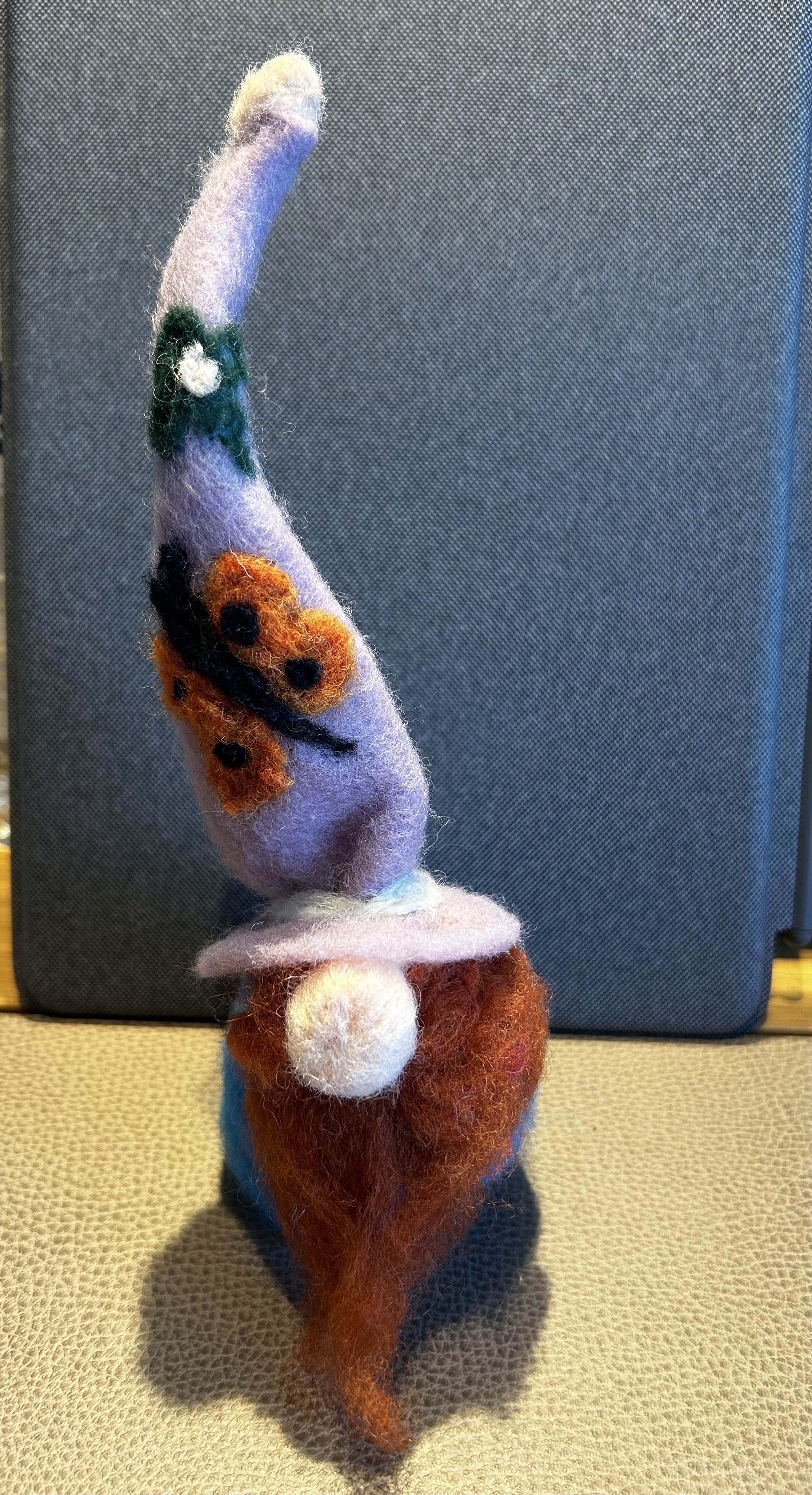
Entertainment on board the Neptune is varied and so much fun. I signed up for a felting class and made a Gnome (calling him Sven), went to a native Tahitian dance/music show, Dancing on Deck, viewed the boat building contest, and attended a Violinist performance. 

Sven


                                                                        Tahitian Dance
Dancing on Deck

                                                        Friends at the Dancing Show

 Violinist
 

Dakar Senegal, Tenerife Canary Islands and Agadir, Morocco

After sailing 7 days we finally reached Senegal. The Neptune docked in Dakar and we finally had a real safari.  We took the excursion to the...